
Yes, with conditions. Tonally varied greige or flecked cream can make everyday marks less conspicuous than a flat pale colour. A wool blend still needs regular vacuuming and prompt spill care. Check the pile against the pet's habits: loops can catch claws, and a household needing frequent machine washing should choose accordingly.
The brief is familiar: young children, a dog, and a client who still wants the calm room from the mood board. A light rug need not leave that room on paper. But the recommendation should include the less photogenic details: hair, crumbs, claw snags and who will deal with a spill.
Choose colour, construction and fibre together. Here is how to work through a cream rug with pets or a greige rug with kids.
Which light neutrals are more forgiving?
Look first at variation within the colour. A soft-gold ground with ivory threads, an oatmeal fleck or a sand-and-taupe speckle breaks up the surface. Against a single flat ivory, a stray crumb or dusty paw mark may have more contrast. This is a visual advantage, not a cleaning treatment.
Before abandoning the pale palette, consider this variation. But lightness matters too: dark pet hair may remain obvious on cream, while pale hair can stand out on a dark rug. The Carpet and Rug Institute suggests considering the pet's hair colour when choosing flooring.
Look at the actual rug in the client's light. Then explain that less visible soil still needs removing. A coffee spill needs attention straight away, whether or not the flecks disguise its outline. Our cream, greige and sand guide covers colour alongside timber and other floors.
Texture helps, but loops need a separate decision
A lower pile makes small dropped objects easier to see than a long shag surface. For a room where Lego and crumbs collect, that is a practical reason to consider it. A dense-looking pebble texture can offer visual depth without long strands; inspect the actual gaps and loops rather than treating the name as a performance rating.
Loops can catch claws. The Carpet and Rug Institute favours cut pile over loops for pets because claws can snag and animals can pull loops out. That does not make every cut pile suitable or every loop rug unsuitable; it makes the animal's behaviour part of the specification.
Ask whether the cat scratches textiles or the dog digs before settling. If that happens regularly, steer away from exposed loops. Keeping nails trimmed may help in an otherwise suitable household, but does not remove the risk. If an Elmsett loop pulls, trim it level with the pile rather than tugging it. Our texture guide explains the different surfaces.
Fibre by fibre: what changes at home?
Fibre is only part of the answer. Yarn, pile, backing and the manufacturer's care instructions also matter. These are general considerations, not results from a matched test of Elmsett against other rugs.
| Fibre | Shedding | Marks and spills | Feel | Cleaning |
|---|---|---|---|---|
| 100% wool pile | Loose fibres can appear; amount and duration depend on yarn and construction. | Wool's surface can make dry soil less visible. A spill can still leave a lasting mark. | Spring and texture depend on the particular pile. | Follow the label; avoid excessive heat, agitation and wetting. Use a wool-experienced cleaner. |
| Jute | Fibre release varies with the yarn and weave; inspect the rug's care guidance. | Treat moisture cautiously. Do not assume a natural-fibre rug tolerates wet cleaning. | Compare the actual sample if the family sits on the floor. | Plant fibres need specialist methods; professional advice is preferable to an improvised wet wash. |
| Polypropylene | Yarn may be continuous filament or staple; fibre name alone does not settle shedding. | Many liquid marks may be easier to manage, but no blanket removal guarantee follows. | Finish and construction vary; synthetic does not automatically mean a particular feel. | Follow the rug's label. A polypropylene pile does not mean the complete rug is machine-washable. |
| New Zealand wool blend | Elmsett's material notes describe blends for less shedding; some loose fibre remains possible. | Mixed fibres do not remove the need to act quickly on spills. | Wool and companion fibres contribute to the particular surface; compare the rug, not just its label. | For Elmsett: suction-only vacuuming, careful spot treatment and professional deep cleaning. |
Nylon is used for resilience and resistance to abrasion; polyester and polypropylene have different responses to moisture and staining. Blending changes the material mix, not the need to consider construction. New Zealand identifies the wool's origin, not a guarantee of low shedding or easy cleaning.
Shedding and pet hair are different jobs
Loose rug fibre and pet hair can arrive in the same vacuum bin, but they have different sources. The blend does not stop the dog shedding. Nor does the phrase “less shedding” tell a client how often they will need to vacuum a particular room.
Elmsett's product material notes describe companion fibres used for less shedding and everyday durability. Our Help guidance allows for loose fibre in the first 2–6 weeks; that is an early-care expectation, not a promise that shedding ends on a particular day. Vacuum gently and a little more often while needed. If fibre loss worries the client, ask for advice rather than treating every amount as normal indefinitely.
A manageable cleaning routine
For an Elmsett wool blend, vacuum with suction only and switch off a rotating brush or beater bar. Weekly suits many rooms; busy seating areas and pets may call for more frequent passes. Pick up hard toys first and move slowly across the surface.
For a fresh spill:
- Lift any solid material without pushing it into the pile.
- Blot with a clean white cloth, working from the outside towards the centre. Do not rub.
- If a mark remains, test a wool-suitable cleaner in a hidden place. Apply it to the cloth, not directly to the rug.
- Use small amounts of cool or lukewarm water to blot away residue. Avoid bleach and over-wetting, then blot dry.
Persistent stains, old urine marks or recurring odour need a rug professional experienced with wool. Tell the cleaner the rug is a blend and provide its care label. Elmsett recommends professional deep cleaning rather than a washing machine or home steam cleaner. See Help for the full care guidance.
When to say no to a light rug
Choose another option if… the pet has frequent accidents; the cat regularly claws fabrics; the rug will sit directly in a muddy entrance; deep-coloured drinks are often spilled and left; or the client needs to machine-wash the whole rug. A darker colour alone will not fix a cleaning or snagging problem.
Machine-washable synthetic rugs can be a sensible choice when frequent spills or toddler mess make whole-rug washing a priority. Check the exact product's washing instructions, dimensions and fit in the client's machine. No need to talk the client out of a feature they will actually use.
Elmsett examples for a family sitting room
Start with appearance, then make the care decision above. These are palette examples, not a ranking from household durability testing.
- Daybreak, A$649: ivory loops with little flecks of oatmeal and a close, irregular texture. Its wool blend includes nylon and polyester.
- Dapple, A$649: cream loops with warm sand and taupe flecks, gathered in rounded clusters. Its wool blend includes polyester and nylon; inspect those loops against a scratching pet's habits.
- Glint, A$549: ivory loops through a warm, soft-gold ground. Its wool blend includes nylon and polypropylene.
The pictured examples are listed at 200 × 300 cm, with free delivery Australia-wide. Prices checked 2 October 2026; the product page shows the current price. Tape the footprint out in the client's seating area before ordering.
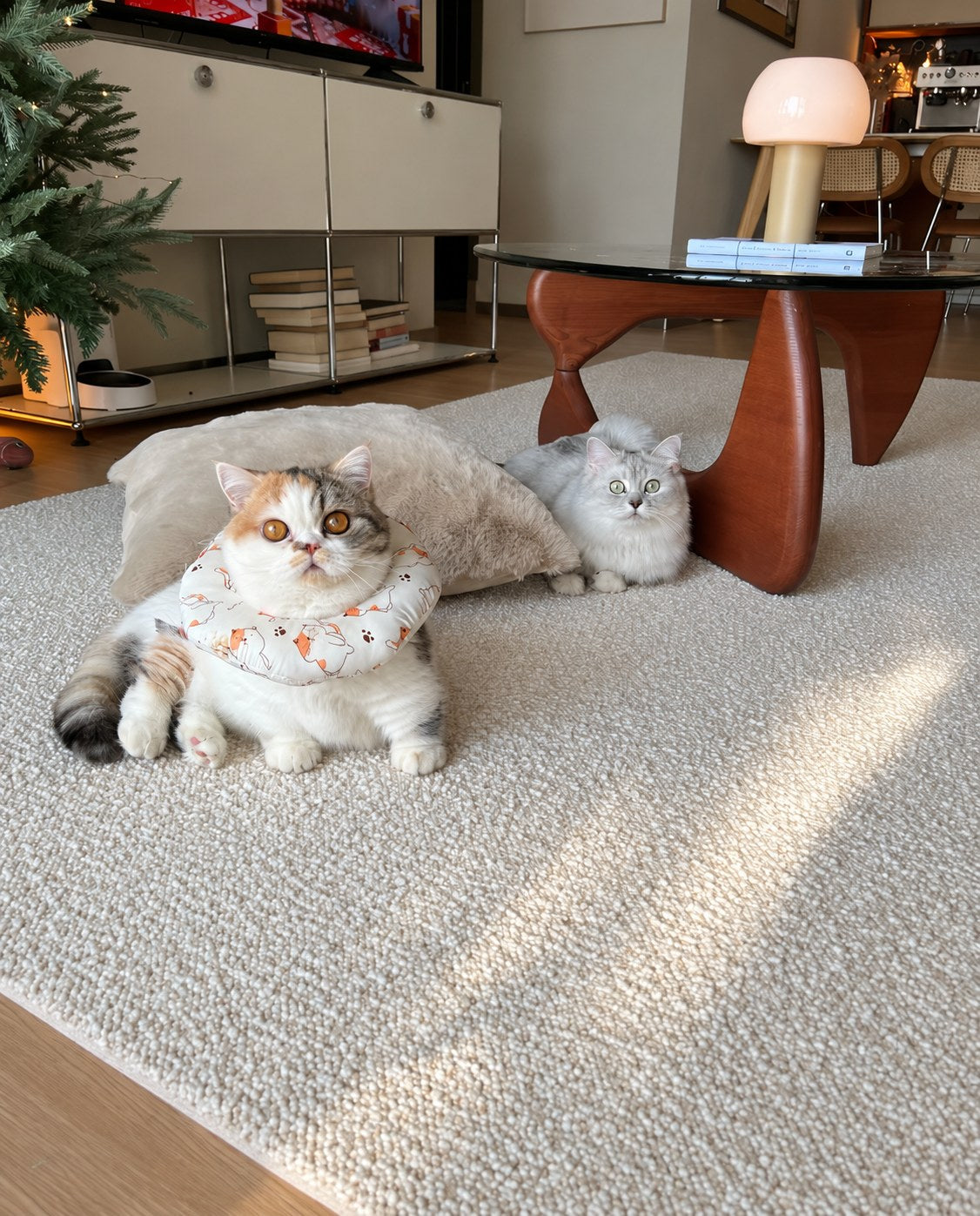
Our photograph shows two cats relaxing on Daybreak beside a wooden coffee table. It shows the rug's colour and texture in that scene. It is not a customer testimonial, a long-term wear record or evidence of resistance to claws or spills.
Questions clients ask
Will a cream rug yellow?
It can discolour; cream is not a promise against yellowing. Built-up oily soil, unsuitable cleaning and excessive wetting can affect appearance. Follow the care label, avoid prolonged direct sunlight and seek advice if a colour change persists rather than trying bleach.
Do wool blends hold pet odour?
They can retain odour after an accident, as other rugs can. A fibre label does not guarantee odour removal. Blot fresh accidents promptly and avoid steam or hot water; persistent smell or old urine marks need professional assessment.
How often should the client vacuum?
Start weekly, then adjust to visible hair, loose fibre and traffic. Elmsett recommends suction only without rotating brushes. A home with pets may need more frequent attention; there is no fixed schedule that fits every family.
Can the client steam clean it?
For an Elmsett wool blend, choose a wool-experienced rug professional instead of a home steam cleaner. That is not a ban on every professional cleaning method for every wool rug: the cleaner should select a method suited to the whole rug and its label.
The calm room can still happen
A client can keep the pale palette and make a realistic choice. Recommend tonal variation for its appearance, check the loops against the animal, and agree a care routine the household will actually keep. When frequent washing matters more, choose accordingly.
Return to the neutral colour guide, explore the rugs, or bring a care question to Help. The aim is a room the family can enjoy living in.
Sources
- Elmsett Help, product pages and Shipping policy: current materials, prices and care guidance checked 2 October 2026. This is Elmsett's own buying guide.
- Carpet and Rug Institute: pets and carpet: colour, pet hair and loop snagging.
- Carpet and Rug Institute: The Carpet Primer: general fibre and yarn characteristics, not product-specific testing.
- Carpet and Rug Institute: Carpet and Rug Care Guide: wool and plant-fibre care, soil and discolouration.
- WoolSafe: cleaning and maintenance of wool carpets: careful spot treatment and professional help for old urine stains.